
What Bonanza Billion Merge Up actually is
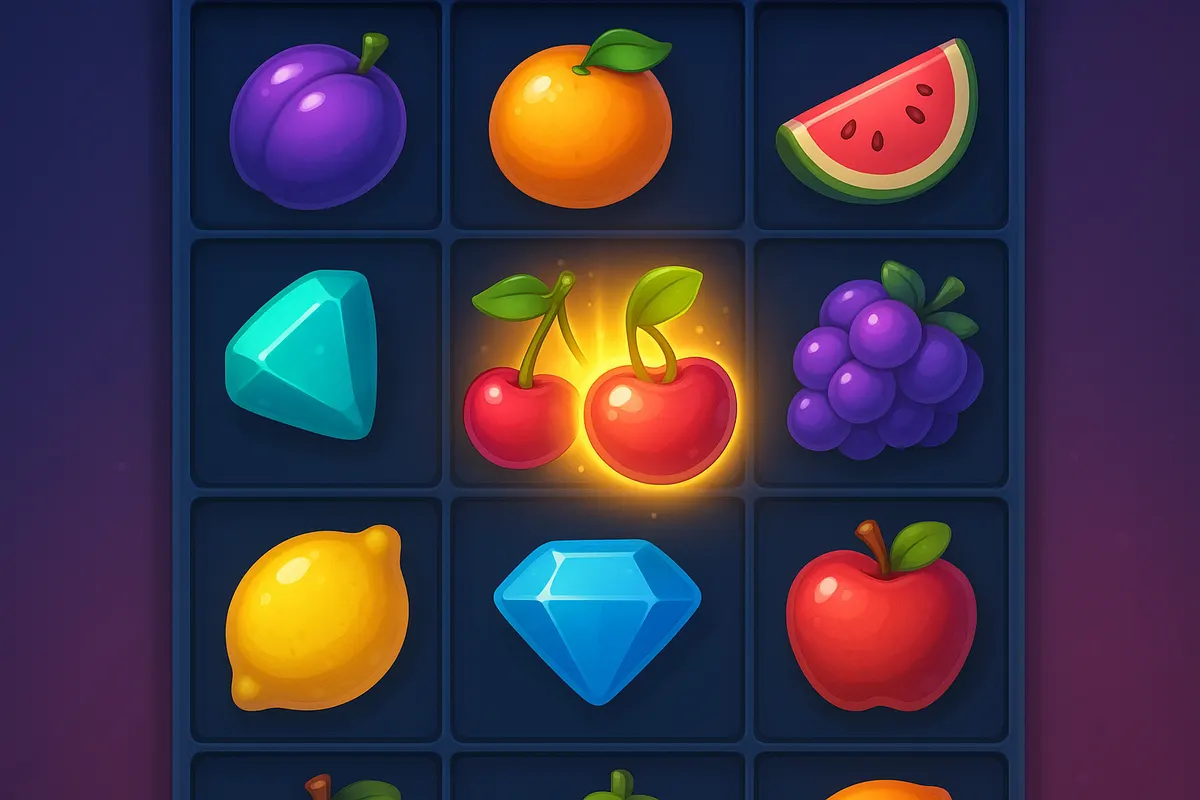
Bonanza Billion Merge Up is BGaming’s fruit-and-gem slot that rebuilds the cascade: instead of winning symbols vanishing, they fuse into a symbol that is already sitting on the grid. Simple enough as a one-liner. The interesting part is what that single change does to the rhythm of a spin.
The game, launched as Bonanza Billion Merge Up+ under BGaming’s #Entertainment series, takes the look of the original Bonanza Billion, a title that has been in circulation for around five years, and bolts on a reworked version of the studio’s Merge Up mechanic. BGaming says the rework came directly out of player and streamer feedback about a familiar irritation: in standard cascading slots, every winning symbol disappears and whatever drops in next is effectively a fresh roll of the dice. Momentum resets. Merge Up keeps something behind.
That is the differentiator, and it is worth understanding before you load a spin, because it changes where the tension in a round lives.
| Spec | Detail |
|---|---|
| Provider | BGaming (#Entertainment series) |
| Full title | Bonanza Billion Merge Up+ |
| Core mechanic | Merge Up, a cascade variant where winning symbols fuse instead of clearing |
| Theme | Fruit and gem symbols, carried over from the Bonanza Billion series |
| Volatility | High, per BGaming’s own description of the math model |
| Hit rate | 2.59, as published by BGaming |
| Free spins multipliers | Up to 100x |
| Buy Bonus | Available at 100x the stake |
| RTP | Check the in-game information panel at your casino (see the RTP section below) |
How the merge mechanic works, step by step
Here is the sequence in practical order, the way it plays out on screen.
- You spin. Symbols land on the grid as usual.
- A winning combination forms. In the Bonanza Billion family this comes from groups of matching fruit and gem symbols rather than a single left-to-right payline, so you are watching the whole grid, not one row.
- The win pays, then merges. This is the twist. Rather than the whole cluster evaporating, the winning symbols fuse and leave behind a symbol that was already present on the reels.
- New symbols drop in to fill the gaps, exactly as in a normal cascade.
- The grid re-evaluates. If another win has formed, the cycle repeats. If not, the round ends.
The merge, not the vanish
The detail to hold onto is which symbol survives the merge. BGaming’s explanation is explicit: the more copies of a given symbol are already in play, the greater the chance that this is the symbol the merge produces. So a grid that is already leaning heavily toward, say, cherries is more likely to produce another cherry out of a merge.
That is a weighted outcome, not a guarantee. The merge result is still decided by the game’s RNG, and nothing about the mechanic makes a particular symbol due. What it does is make sequences feel less random in texture, because a grid that has started to build in one direction tends to keep building rather than being wiped clean.
Why matching symbols snowball
Think about what that weighting means across a long cascade. Standard tumbling slots are memoryless between drops: clear the cluster, refill, hope. Merge Up carries state forward. Each resolved win leaves a brick behind, and the composition of the grid feeds into the next merge.
The honest consequence cuts both ways. You get more rounds that chain into something sizeable, and you also get more spins that die on the first evaluation with nothing to carry forward. That shape is exactly what a high volatility math model looks like in practice, and we will get to that.
Where cascades fit in
Merge Up is not a replacement for cascading reels, it is a modification of them. Refills still happen, wins are still re-evaluated after every drop, and a single spin can resolve through several stages before it settles. If you have played Sweet Bonanza-style tumble slots or any cluster pays game, the loop will feel familiar within about three spins. The merge step is the new beat in the middle.
Fruit, gems and why the theme is doing real work
Fruit themed slots are the most worn-out skin in the business, and BGaming is reusing one deliberately. The Bonanza Billion series built its audience on bright fruit and gem symbols plus a fast reward loop, and the studio credits that design for the series’ run since launch.
The theme earns its place here for a legibility reason. Merge mechanics are visually confusing when symbols are abstract or fussy, because you need to see instantly which symbol survived a fusion and how many of it are now on the grid. Chunky, high-contrast fruit and gems solve that. You can read the state of the grid at a glance, which matters a lot when the mechanic’s whole appeal is watching one symbol accumulate.
For the exact symbol hierarchy, group sizes and pay values, open the paytable in-game. Those values are the part worth checking yourself rather than taking from any guide, including this one.
RTP, volatility and reading the math model honestly
BGaming has publicly confirmed one half of the math: Bonanza Billion Merge Up+ runs on a high volatility model. The RTP figure is the number you should verify in the game’s own information panel at the casino you are playing on, and here is why that is not a dodge.
Many slot suppliers ship titles in multiple configurable RTP versions, and operators choose which one to run. Two casinos can host what looks like the same game at different return percentages, and the only authoritative figure is the one printed in the game’s info screen on that site. Treat any third-party number as secondary.
What the numbers mean in plain terms:
- RTP is the share of all wagers a game returns over millions of rounds. A 96% RTP means roughly 96 returned per 100 wagered as a long-run average, which also means a 4% house edge. It is not a session forecast and it is not owed to you.
- High volatility describes the distribution of those returns, not their size in total. Wins land less often and arrive bigger when they do. Volatility never changes RTP.
- Hit frequency is a separate stat again: how often any win occurs. BGaming publishes a hit rate of 2.59 for this release, which reads as roughly one winning spin for every 2.59 spins over the long run. Averages do not smooth out inside a short session, so expect runs of dead spins regardless.
Practical read: a high volatility merge slot will produce long barren stretches punctuated by cascades that chain. If your bankroll cannot absorb twenty or thirty empty spins without stress, the stake is too high for the game, full stop. If you want the longer version of this maths, see our guide to slot RTP and house edge.
Free spins, the 100x multiplier and the Buy Bonus
Free spins round
The game follows the series formula with a free spins bonus, triggered in-game, that runs the Merge Up mechanic alongside multipliers. Because merges carry symbol state forward, the bonus is where the mechanic has the most room to build, longer sequences, more chances for a merge to reinforce a symbol that is already stacked.
Multiplier system
BGaming confirms multipliers of up to 100x inside the free spins round. The 100x is a ceiling, not a typical value, and that distinction matters more in a high volatility game than almost anywhere else. Headline multiplier caps sell screenshots; the everyday experience sits far below them. Check the paytable for how multipliers are awarded and whether they accumulate across spins.
Buy Bonus and special symbol effects
A Buy Bonus option is available at 100x the base stake, which buys direct entry to the free spins round. Two things to keep straight. First, buying a feature does not improve your expected return, it converts a long, cheap grind into one expensive, high-variance purchase, and the house edge still applies to the price. Second, feature buys are restricted or disabled in several regulated markets and are typically excluded from bonus wagering, so read the terms before you spend 100x a spin.
Special symbols and how they interact with merges are documented in the game’s own rules screen. If a guide tells you exactly how wilds or scatter behaviour works without citing the paytable, be sceptical.
Where this fits in BGaming’s release run
BGaming has been iterating on mechanics rather than themes, and this release makes the pattern obvious: take a proven series skin, rebuild the engine underneath, publish it under the #Entertainment banner. Merge Up has existed in the studio’s catalogue before; what is new here is a version tuned on streamer and player feedback and dropped into the Bonanza Billion wrapper, which is the studio’s most recognisable fruit property.
It also tracks a wider shift across slot development. The industry has largely exhausted “more paylines” as a selling point and moved on to mechanics that preserve state between drops, merges, sticky symbols, accumulating multipliers. Players respond to visible progress within a round. Merge Up is a tidy expression of that idea: the cascade that does not forget. If you want the broader catalogue context, see our BGaming provider review, or browse the fruit slots category for comparable titles.
FAQ
How does the merge mechanic work?
When a winning combination resolves, the symbols fuse rather than disappear and leave behind a symbol already present on the grid. The more copies of a symbol are already in play, the higher the chance the merge produces that symbol. New symbols then drop in and the grid is re-evaluated.
What is the Bonanza Billion Merge Up RTP?
BGaming has confirmed the high volatility math model publicly but the RTP you should rely on is the one shown in the game’s information panel at your casino, since suppliers often offer configurable RTP versions and operators pick the setting.
Is Bonanza Billion Merge Up high volatility?
Yes. BGaming describes the game as built on a high volatility model, so expect infrequent wins with larger swings rather than steady small returns. The published hit rate of 2.59 tells you how often any win lands, not how big it is.
How do you play merge slots?
Set a stake you can lose comfortably, spin, and let the round resolve through its merge and cascade stages before judging it. Read the paytable first, use demo mode to learn the rhythm, and decide in advance whether you will touch the Buy Bonus at all.
Slots are entertainment with a built-in house edge, and no mechanic changes that. Set deposit and loss limits before you play, take the reality checks seriously, and if it stops being fun, use the cool-off and self-exclusion tools your casino provides. Help is available through national problem-gambling services.