
Is online betting actually banned in Brazil now?
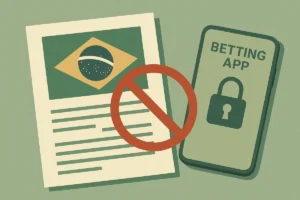
Short answer: yes, and faster than almost anyone in the industry expected. On 25 September 2026, President Luiz Inácio Lula da Silva signed Provisional Measure No. 1,394, which prohibits the operation, offering, intermediation and advertising of fixed-odds betting lotteries across Brazilian territory. That single sentence rewrites Brazil betting regulation less than two years after the country finally opened a licensed market.
But the headlines have been sloppy. “Brazil bans gambling” is not what the text says, and the practical picture, a phased shutdown with a player-refund mechanism and a new enforcement committee, is both narrower and more aggressive than the coverage suggests. Here is what the measure does, how it works legally, and why it matters well beyond Brazil.
What Brazil’s provisional measure actually says
Provisional Measure No. 1,394 of 25 September 2026 carries three distinct functions. It prohibits fixed-odds betting lotteries. It creates an Interinstitutional Committee for the Oversight of the Illegal Operation and Advertising of Fixed-Odds Betting. And it amends Law No. 14,790 of 29 December 2023, the statute that built Brazil’s licensing regime in the first place.
The provisions in plain terms
Article 1 is the core. It bans the operation, offering, intermediation and advertising of fixed-odds betting lotteries by physical or virtual means within national territory, and it explicitly reaches an operator established abroad that offers those products to a person located in Brazil. That extraterritorial wording is the part compliance teams should read twice: being licensed elsewhere and serving Brazilian users remotely is addressed head-on in the text, not left as an interpretive gap.
Four verbs matter here, and they are not interchangeable:
- Operation captures running the platform or book itself.
- Offering captures making the product available to Brazilian users.
- Intermediation reaches the middle layer, the agents, payment facilitators and affiliates who connect bettor to operator.
- Advertising reaches marketing, sponsorship and promotion, which in Brazil means shirt sponsorships, broadcast inventory and influencer campaigns.
The committee created alongside the prohibition tells you where the state’s attention goes next. Its remit is named around illegal operation and advertising, which is the usual signal that enforcement, payment and content blocking, and coordination between agencies is the follow-through phase rather than an afterthought.
The wind-down timeline
This is where the measure is unusually prescriptive. It does not just prohibit; it sequences the exit and the return of customer balances, with the state bank Caixa available as a fallback intermediary if repayment is obstructed.
| Stage | Date | What happens |
|---|---|---|
| Publication of the measure | From 25 September 2026 | Platforms may no longer accept new bets; new deposits prohibited immediately |
| Voluntary withdrawals | Until 5 October | Bettors withdraw their remaining balances themselves |
| Platforms go dark | From 6 October | Websites and applications must be taken offline |
| Balance reporting | 7 to 8 October | Companies report balances linked to CPF numbers to banks |
| Bank refunds | 9 to 14 October | Banks return remaining amounts to players |
| Fallback | As needed | Caixa may act as intermediary where repayment is impeded |
Read as a whole, that is roughly a three week runway from signature to the end of customer-facing operations. For an operator with hundreds of thousands of funded accounts, the reporting and reconciliation work alone is the hard part.
Separating headlines from reality: what’s actually restricted
Restricted
Fixed-odds betting lotteries, the legal category Brazil used to license sports betting and online casino-style games under the “bets” regime, are prohibited. That covers the licensed verticals the market has been building since the regulated launch, plus the intermediation and advertising layers around them. An online betting ban that also bans promotion is materially different from one that simply closes licences, because it removes the marketing channel that offshore operators would otherwise use to pick up displaced demand.
Still standing
What the text addresses is a specific legal category, not every form of gambling in Brazil. Federal lotteries operated through Caixa, horse racing under its own long-standing framework, and other activities governed by separate statutes are not what Article 1 describes. Anyone reading “Brazil bans gambling” should understand the distinction: this measure dismantles the fixed-odds betting regime, and other products sit under laws that would require their own legislative action to change.
Genuine gray areas
Three questions are not resolved by the published provisions and will be settled either by regulators or by Congress:
- Adjacent product definitions. Where fantasy sports, skill-based games and social casino titles fall depends on whether a regulator treats them as fixed-odds betting lotteries. Expect test cases.
- Enforcement reach over offshore sites. The prohibition explicitly covers operators abroad serving Brazilian users, but reach on paper and reach in practice are different problems, and that gap is exactly why the oversight committee exists.
- Contracts already signed. Multi-year sponsorships, media deals and supplier agreements written against a licensed market now sit in dispute territory.
How provisional measures work in Brazilian law
A provisional measure, or medida provisória, is issued by the President under Article 62 of the Brazilian Constitution and has the force of law from publication. That is why deposits stopped immediately rather than after a parliamentary debate. It is executive action with legislative effect, reserved for matters of urgency and relevance.
It is also temporary by design. The measure must go to the National Congress, where it remains in force for 60 days and can be extended once for a further 60 days. If Congress does not convert it into ordinary law within that window, it lapses. Congress can also amend it during conversion, which means the final statutory text can differ from what was signed in September.
Three consequences follow for anyone modelling Brazil:
- The shutdown is happening now, on the executive’s timetable, not after legislative consensus.
- The eventual permanent rule is still being written, and the industry’s lobbying effort moves from the ministries to Congress.
- A lapse or substantial amendment would create a second transition, with its own legal mess around balances already refunded and licences already surrendered.
In other words, the ban is immediate and the framework is unsettled at the same time. That combination is rare, and it is the single most important thing to understand about the current state of betting market regulation in Brazil.
Impact on operators and market access
Licensed incumbents
Operators that paid to enter Brazil’s regulated market, which under Law 14,790 meant a federal authorisation fee in the tens of millions of reais for a five-year term covering a limited number of brands, plus tax on gross gaming revenue, are facing a phased exit rather than a renegotiation. The sunk costs are substantial: licensing, local entities, payment integrations, certified games, compliance headcount, marketing commitments and sponsorship contracts across Brazilian football.
The operational priority for the next weeks is narrow and unglamorous: stop accepting money, communicate the withdrawal window clearly, reconcile balances against CPF records, report accurately to banks, and document everything. Refund disputes are where reputational and legal damage accumulates fastest.
New market entrants
Market access is closed for now. Licence applications in progress have no regulated product to attach to, and the advertising prohibition removes the usual pre-launch brand-building route. For suppliers, aggregators, payment providers and affiliates, Brazilian revenue has to be treated as suspended rather than deferred, because intermediation is named in the prohibition alongside operation.
Compliance requirements
Practical obligations fall into four buckets: halting deposits and bet acceptance on the date of publication, taking consumer-facing sites and apps offline from 6 October, reporting player balances to banks in the 7 to 8 October window, and withdrawing all marketing, sponsorship and affiliate activity aimed at Brazilian users. Group structures with offshore brands need to review whether any entity is still accessible to customers in Brazil, since the text covers foreign-established agents offering to persons located in the country.
Brazil against other emerging market playbooks
Brazil has now done something unusual: it built a licensed regime and then shut it down by executive action before the market matured. Most regulated gambling markets in developing economies move in one of three directions instead, and the comparison is instructive.
| Market | Approach | Direction of travel |
|---|---|---|
| Brazil | Federal licensing under Law 14,790, now prohibited by provisional measure | Open, then abrupt reversal pending Congress |
| India | Historically state-by-state, with central legislation in 2025 restricting real-money online games | Fragmented, tightening at the centre |
| Philippines | PAGCOR licensing domestically; offshore gaming licences wound down after the 2024 policy shift | Keep domestic, expel offshore |
| Colombia | Coljuegos licensing, the region’s earliest online framework | Stable, incremental refinement |
| Peru | Dedicated online betting and gaming licensing through the tourism ministry | Recently opened, consolidating |
Two patterns stand out. First, reversals tend to follow consumer harm politics rather than fiscal logic, and they arrive as blunt instruments because blunt instruments are what executives can deploy quickly. India’s central restriction on real-money online games and the Philippines’ offshore wind-down both followed that shape. Second, markets that regulated early and iterated, Colombia being the clearest case, have faced far less existential risk than markets that scaled advertising and player acquisition faster than their consumer protection and market oversight capacity.
The lesson for anyone modelling emerging-market entry is not that regulation is unreliable. It is that political durability deserves the same diligence as tax rates and licence fees. A framework that passes without broad political ownership can be suspended by the same executive pen that enabled it. If you track this space, our pieces on India’s betting regulation and emerging market gambling laws cover how other jurisdictions have handled the same tensions.
Frequently asked questions
What does Brazil’s betting measure say?
Provisional Measure No. 1,394 of 25 September 2026 prohibits the operation, offering, intermediation and advertising of fixed-odds betting lotteries in Brazil, including by operators based abroad offering to people in the country. It also creates an interinstitutional oversight committee and amends Law 14,790/2023.
Is online betting banned in Brazil?
Fixed-odds betting, the category covering licensed sports betting and online games, is prohibited under the measure. New deposits stopped on publication and platforms had to go offline from 6 October 2026. The prohibition does not rewrite the separate laws governing federal lotteries or horse racing.
How long does a provisional measure last?
It takes effect immediately and stays in force for 60 days, extendable once by another 60 days, while Congress decides whether to convert it into ordinary law. Congress can amend it, and if it is not converted in time it lapses.
What happens to money in player accounts?
Players had until 5 October 2026 to withdraw voluntarily. After that, operators report balances linked to CPF numbers to banks between 7 and 8 October, with bank refunds scheduled from 9 to 14 October, and Caixa available as intermediary where repayment is blocked.
One closing note for readers rather than operators: if you held a balance and the refund path feels unclear, keep your transaction records and deal only with your bank and the official process. And if betting had become something you struggled to control, a forced market closure is as good a moment as any to use the free support services available locally rather than seeking out unlicensed sites.